 PrimeMap
Out again yesterday: four forgotten burial sites in Skåne
There are places where people laid their dead to rest — and which the world then forgot. Yesterday I went looking for exactly those: four last resting places in the north of Skåne, from the hidden mausoleum of a Danish factory owner to a plague cemetery that today is nothing but silent grass. A walk among the forgotten — come along.
The hidden mausoleum of Östanå Bruk
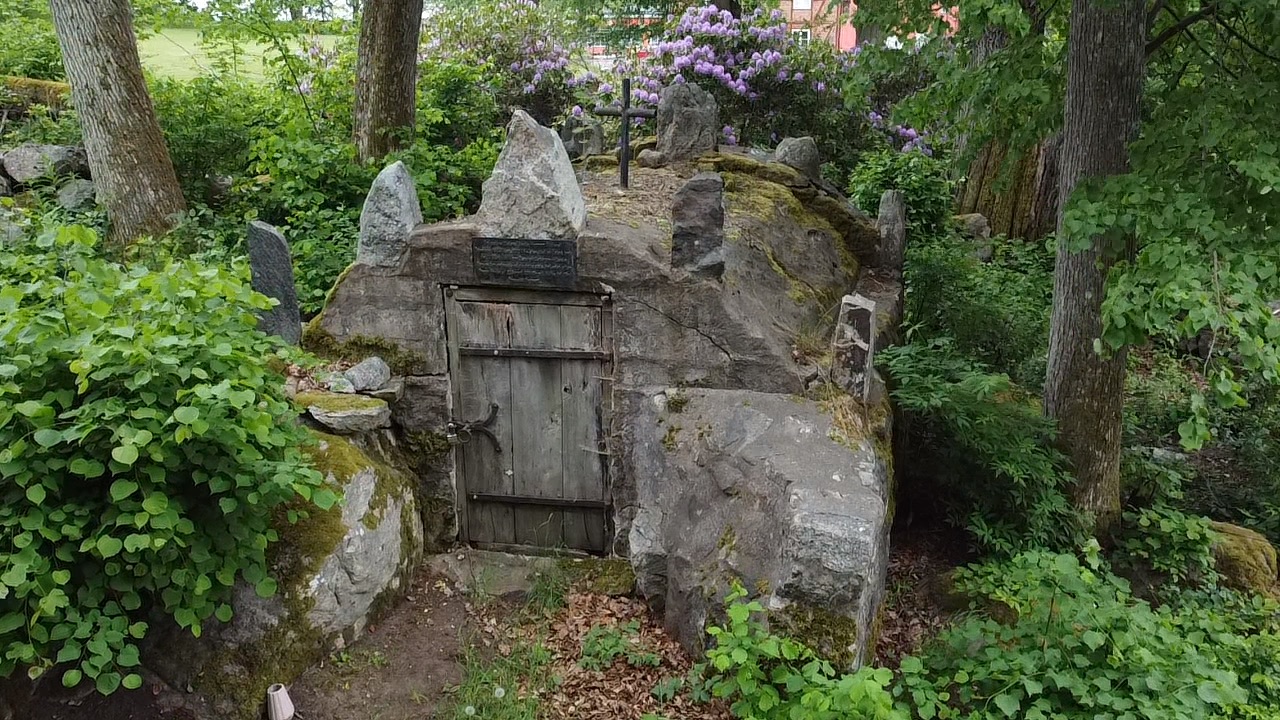
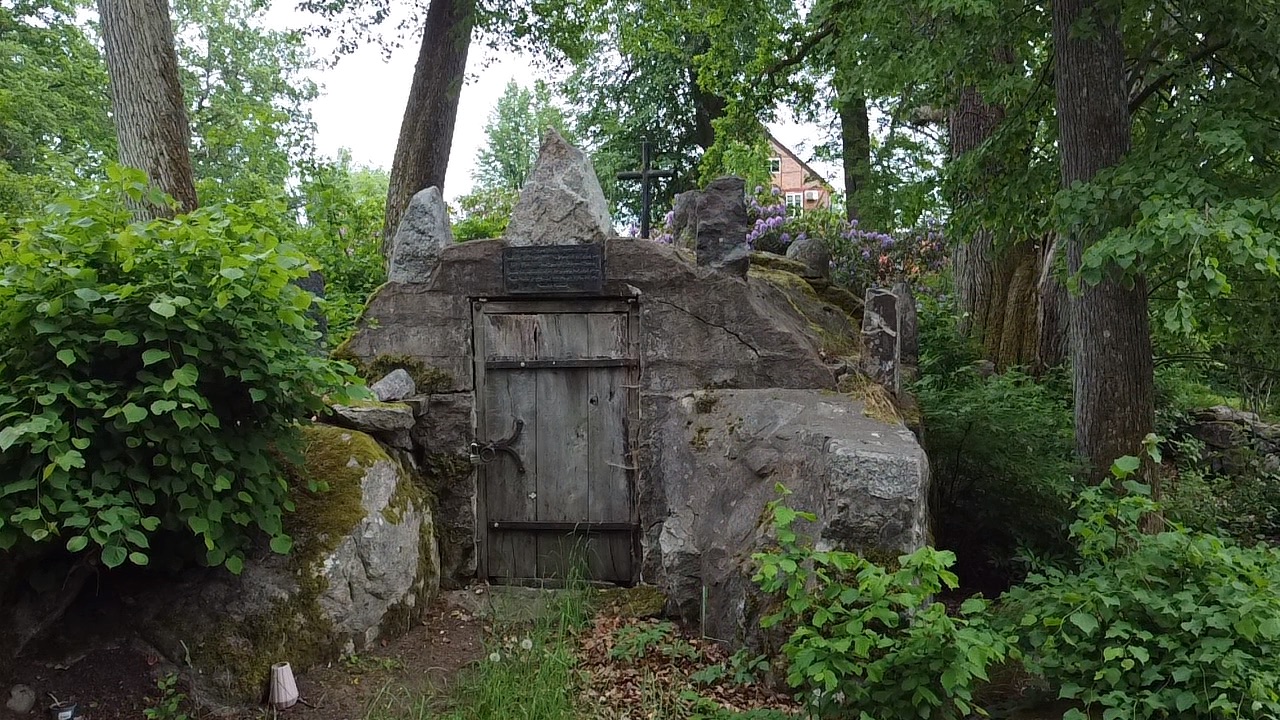
Above an old paper mill, in a patch of woodland called "Pappbacken," stands — half swallowed by rocks and blooming rhododendron — a small grave chapel of dark natural stone. Here rests Moritz Hagemann (1810–1884), a Danish factory owner with an eventful story. After the Peace of Prague he fled his Prussian-occupied homeland, bought the mill here in Sweden in 1872 — and made the deliberate choice to find his final rest in exile. A cast-iron plaque on the chapel still recalls his life today.
The burial mound of Lieutenant Hoppenstedt
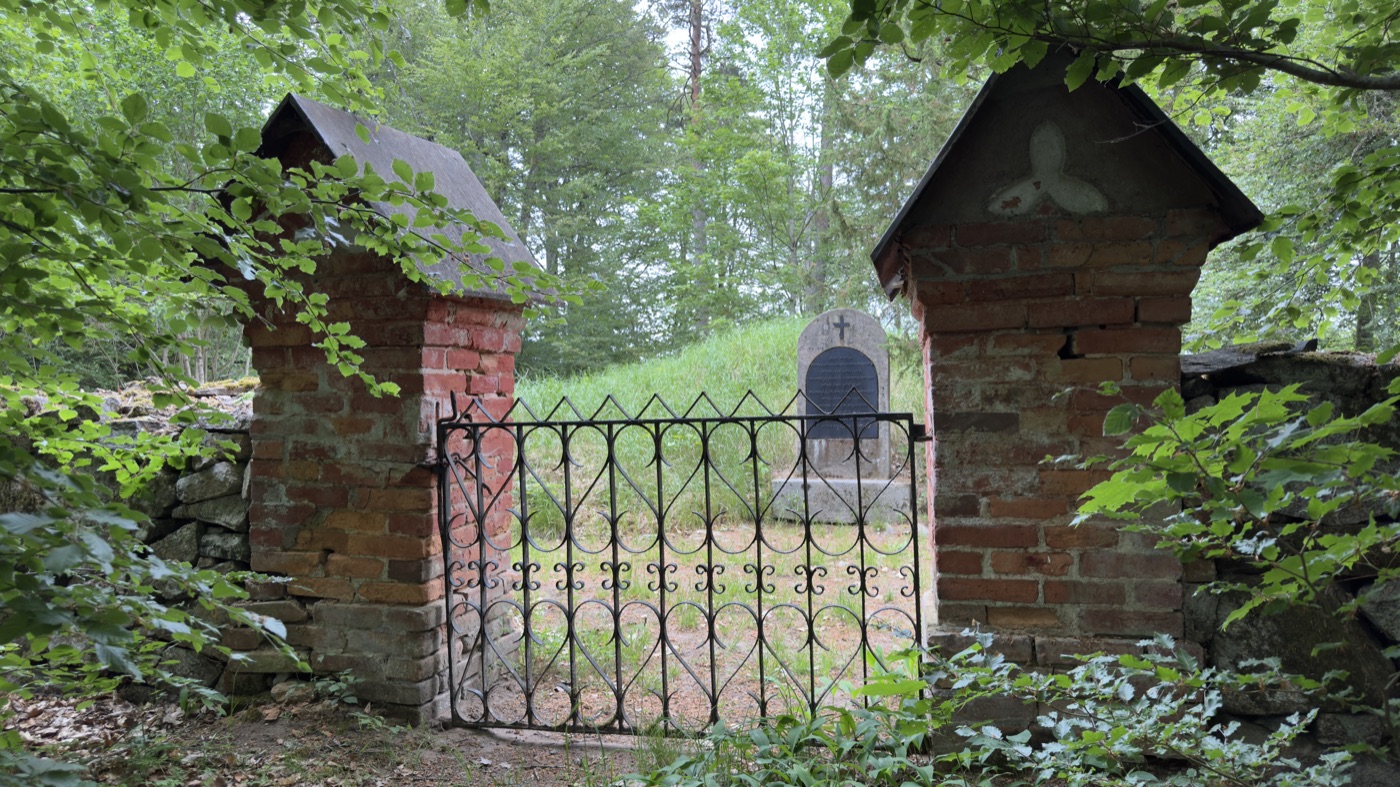
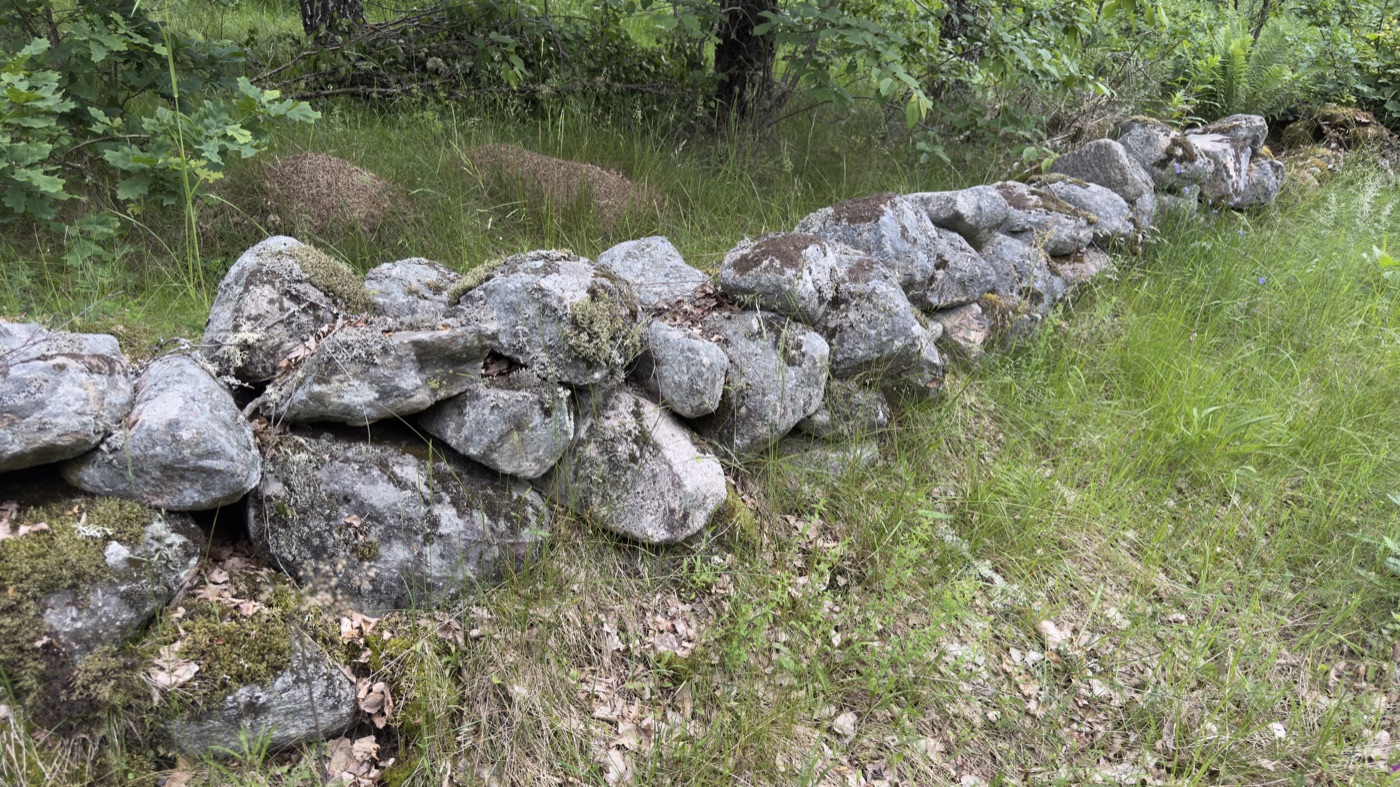
On the grounds of Denningarums Gård near Broby, ringed by old trees, lies a circular burial mound — one of the region's few officially registered private burial places. A wrought-iron gate between brick pillars leads in through a stone wall; the whole site measures about 15 by 15 metres.
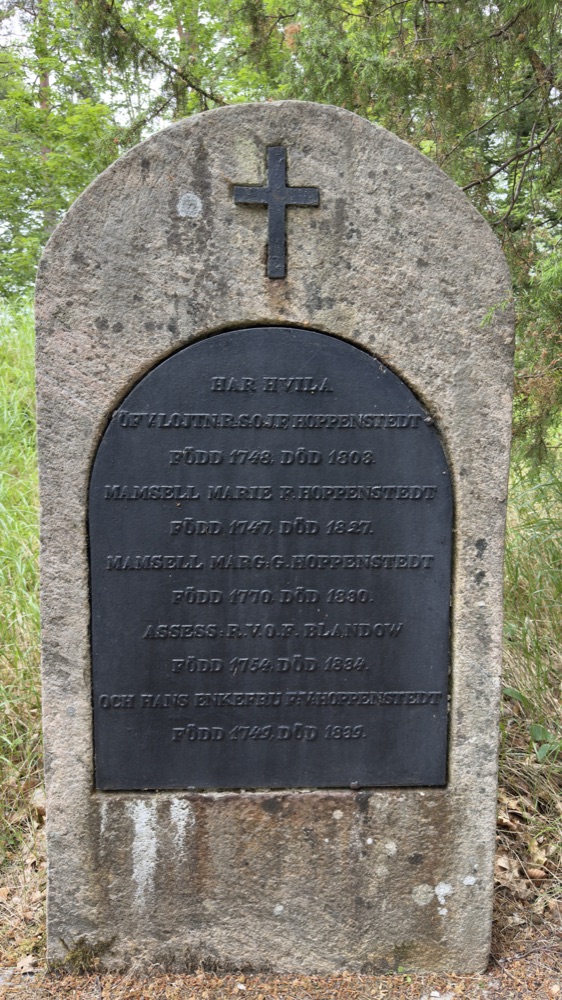
The cast-iron plaque names them: here rests the royal Swedish lieutenant Johan Fredrik Hoppenstedt (1747–1803), whose father once immigrated to Sweden from the island of Rügen as a regimental physician. The family wanted the squire buried in home soil so badly that in 1805 they had him moved from the Broby churchyard to their own land. By 1839, five family members had found their rest here — a hidden gem, deep in the forest.
The ancient grave field of Hästveda
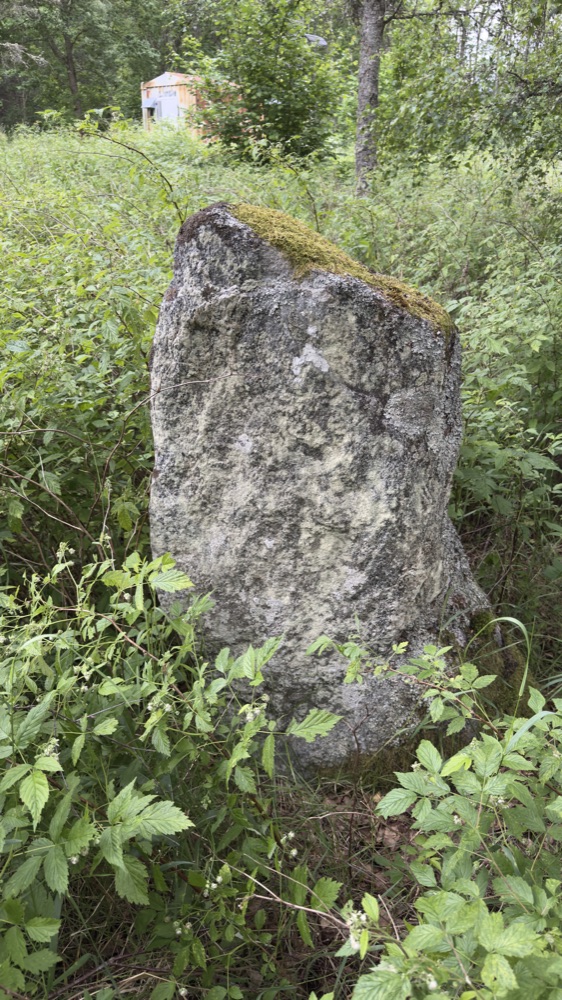
The other sites are a few centuries old — this one is much, much older. In the middle of a meadow stands a standing stone, 1.4 metres high, moss on its crown. It marks a grave field whose extent no one knows. Beneath the turf lie graves: during a 1993 excavation — barely 20 metres away, under today's road — researchers found a full 27 features in about 600 m²: seven cremation graves, foundations for further standing stones, plus the remains of a settlement with hearths and a cooking pit.
The plague cemetery
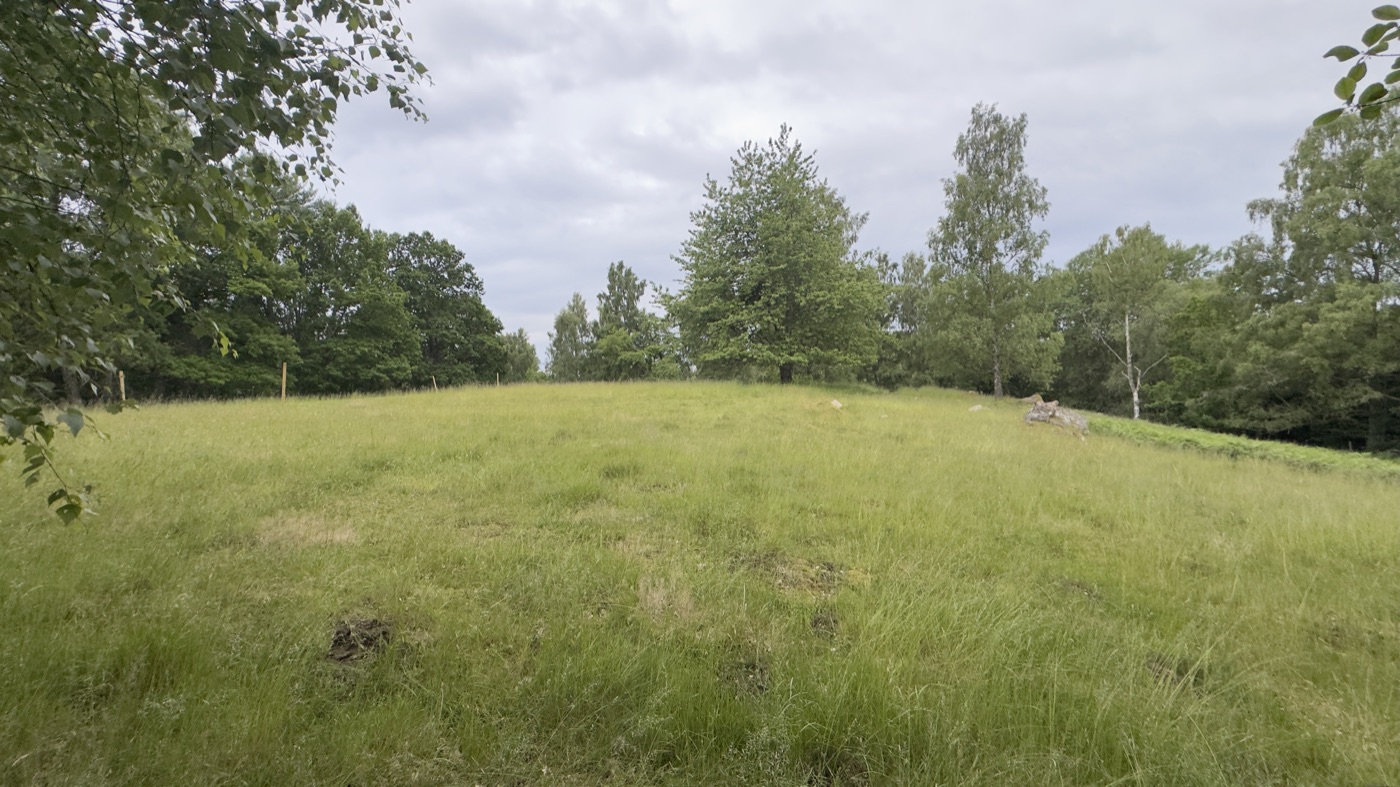
And finally a place that, at first glance, is … nothing. An open meadow, edged by trees, clouds above. And yet: here lay a plague cemetery, about 80 by 70 metres, officially closed in 1823 and still marked on a survey map of 1831. Beneath the silent grass rest those who, in times of pestilence, were brought here — far from the village. No stone, no sign, just grass. Sometimes it's precisely the unremarkable that moves you most.
How I find places like these
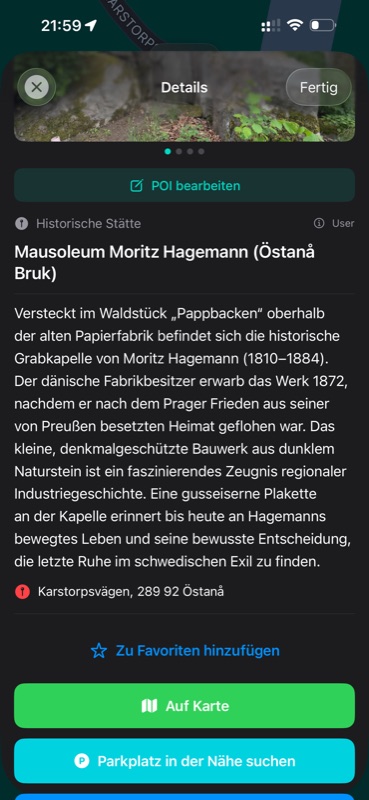
You'd walk straight past most of these spots. The mausoleum hides in the woods; the plague cemetery looks like any old pasture. My tool is the PrimeMap app: it shows me the archaeological sites from the Swedish heritage register as their own pins — with descriptions in my language. And the best part: places that appear in no register, like the Hagemann mausoleum, I added myself as a contribution in the app. Official sites and the community's knowledge on one map — that's how every walk becomes a journey of discovery.
Discover the deep past on your doorstep
Over 680,000 archaeological sites — plus castles, ruins and lost places across Europe, with descriptions in your language. Free for iPhone & Android.
