 PrimeMap
Out again yesterday: three stone-age witnesses in Skåne
There are days when you head out with a camera and find more than you dared hope for. Yesterday was one of them. Somewhere between Hästveda, Glimåkra and Östra Broby, in the wooded north of Skåne, I came across three places that have lain quietly in the landscape for thousands of years — moss-covered, overlooked by almost everyone, and yet astonishingly alive the moment you stand before them. Come along.
The hidden standing stone of Hästveda
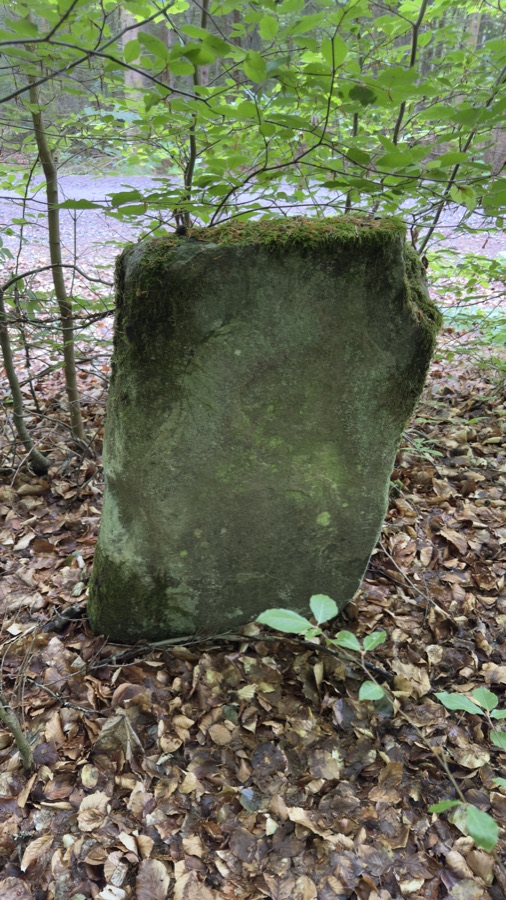
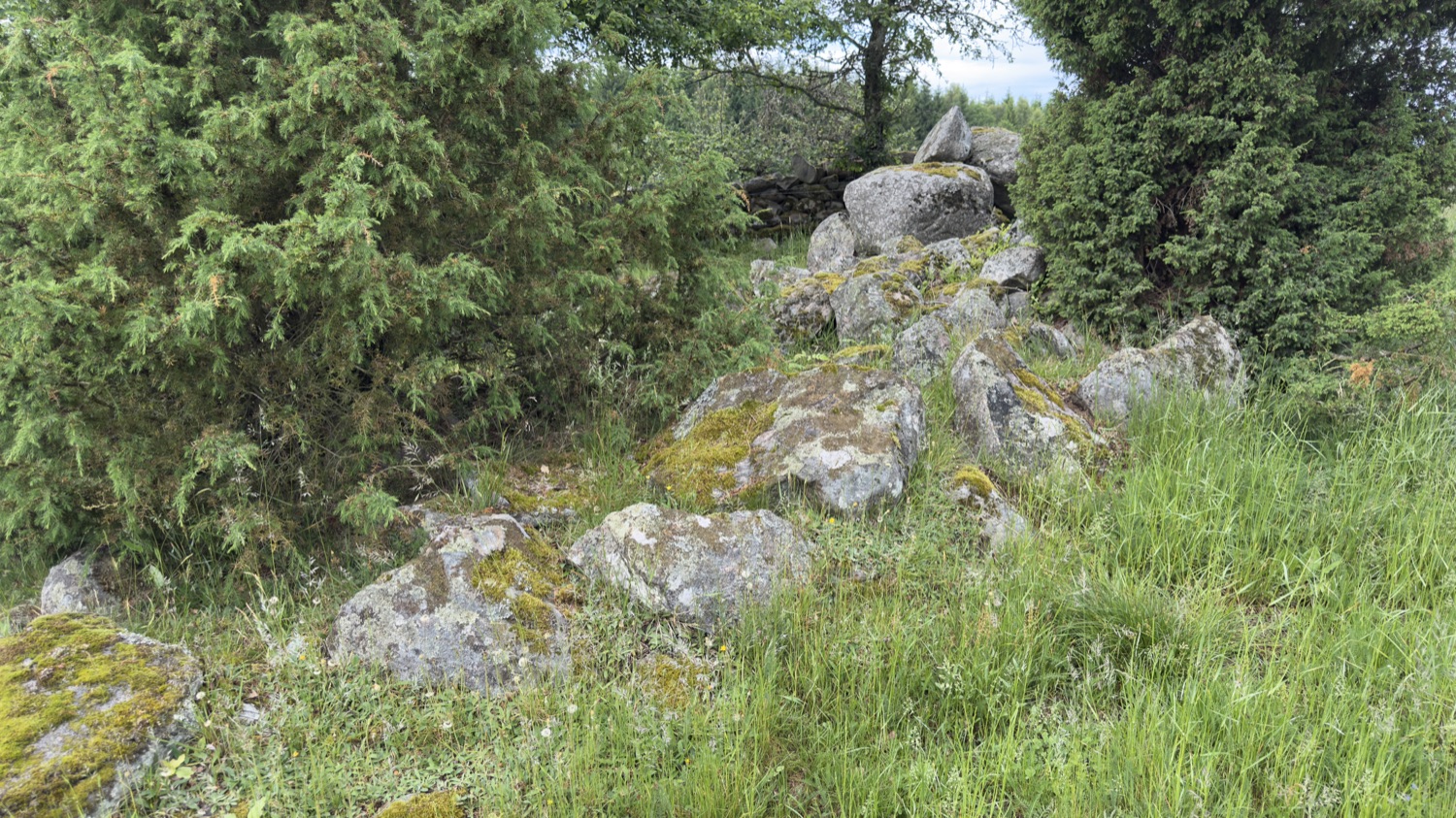
I almost missed the first one. Right by the road, hidden among the bushes, stands an upright stone — barely a metre high, its edges rounded by millennia, its crown blanketed in moss. In the Swedish heritage register (Riksantikvarieämbetet/Fornsök) it carries the matter-of-fact name "grave marked with stones." Its exact purpose? Unknown. And that is precisely what makes it gripping: here stands something a person deliberately raised a very long time ago — and all we can do is wonder why.
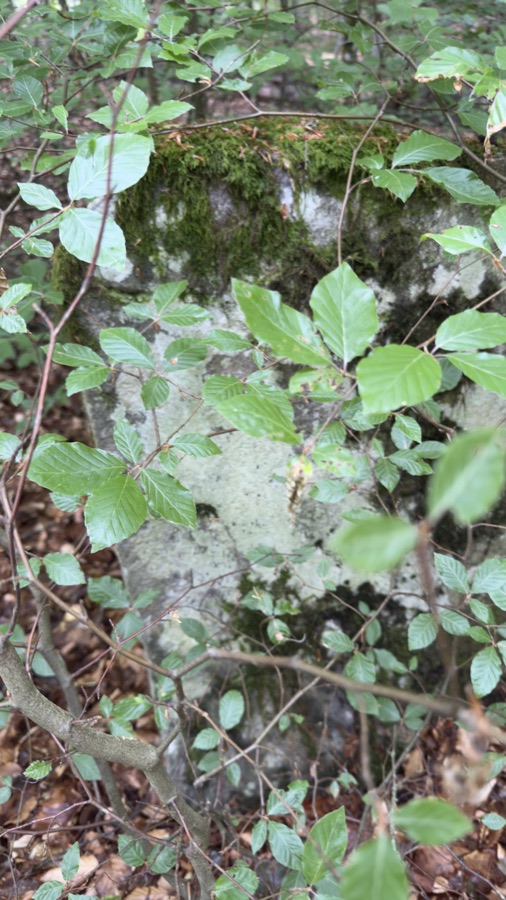
You stand before a stone like this, lay your hand on the cool, rough moss — and suddenly the millennia stop being an abstract idea.
The mysterious cup marks of Glimåkra
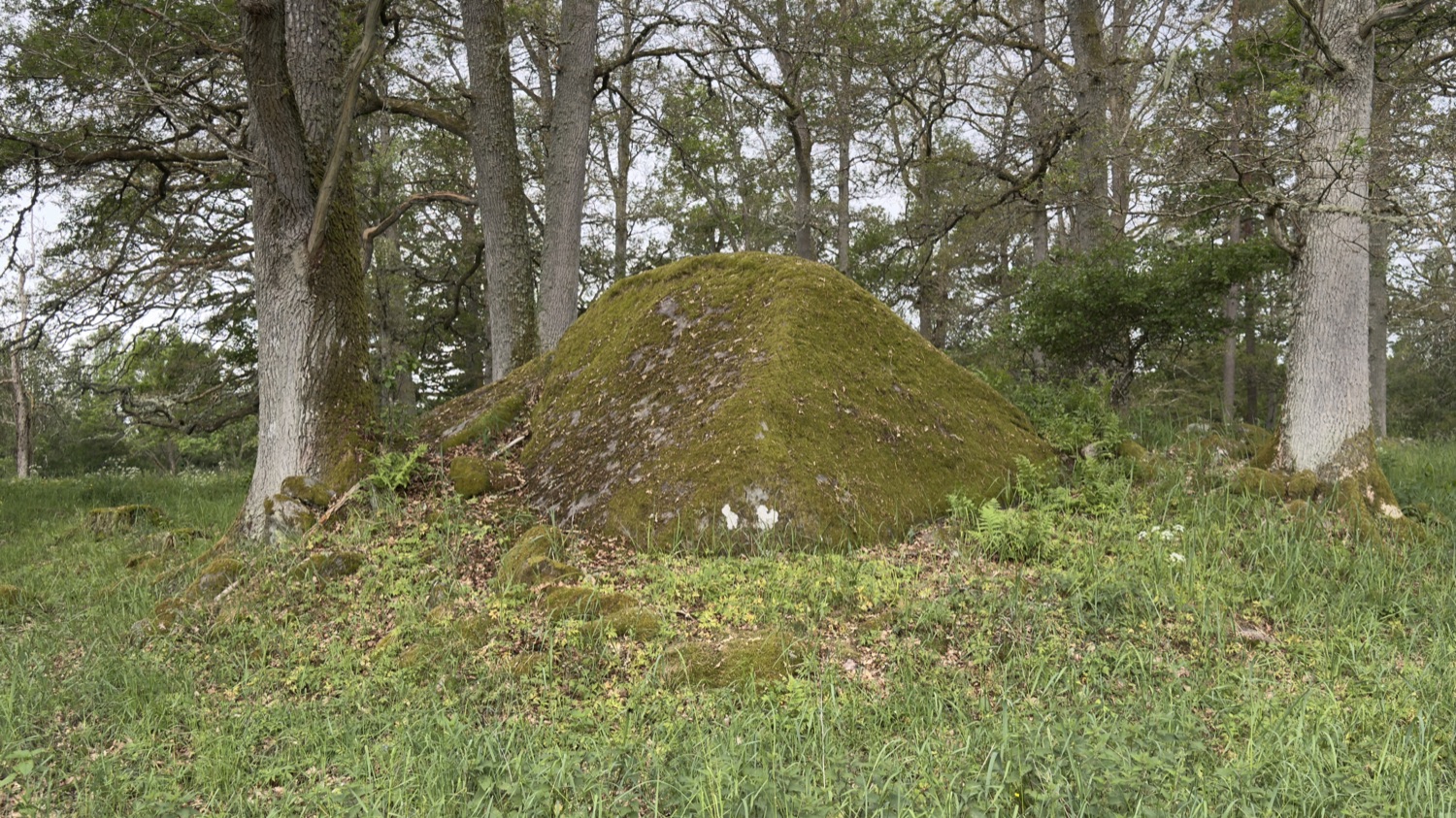
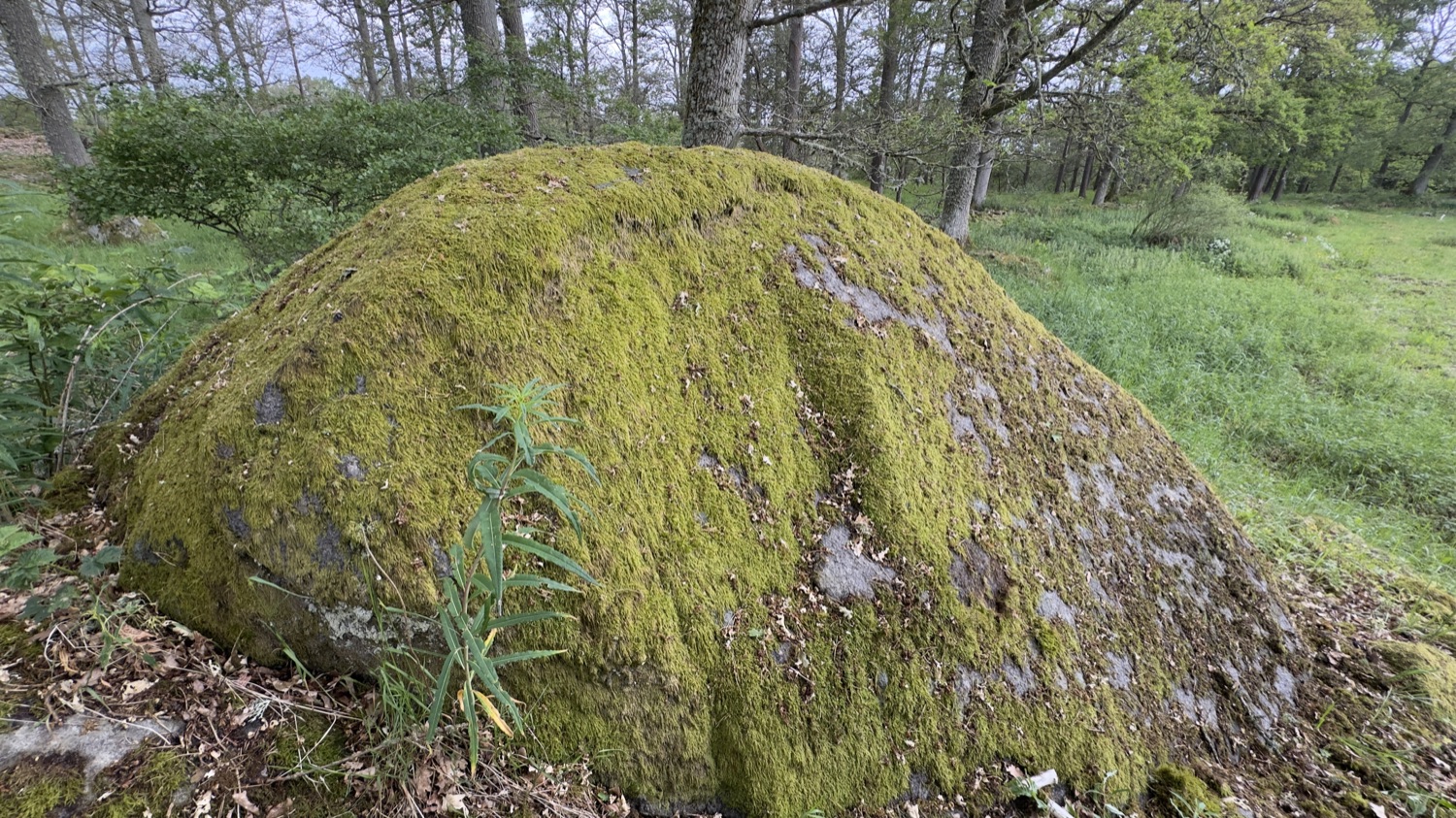
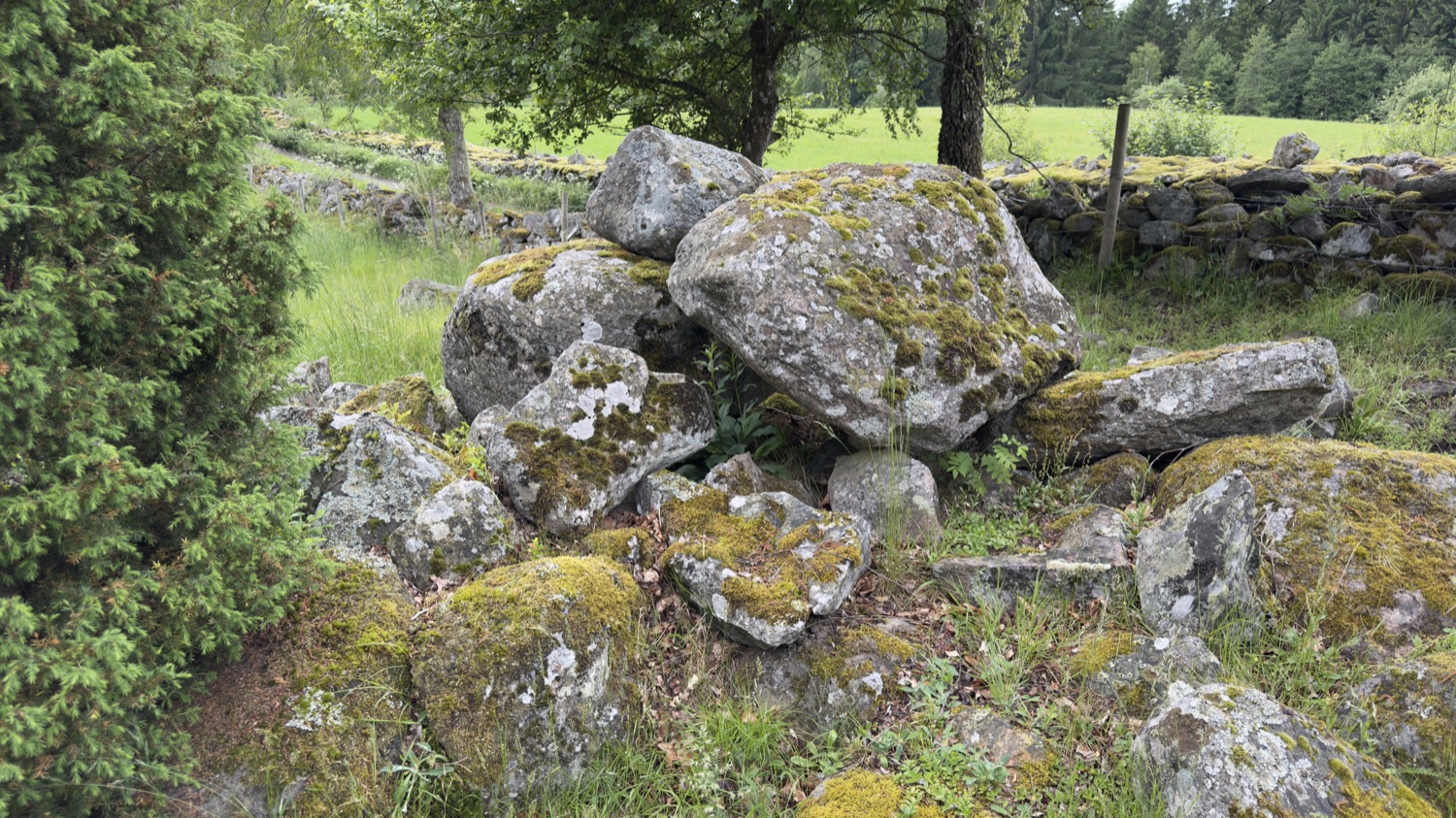
A few kilometres on, in an open oak grove, this giant: an enormous glacial boulder, coated all over in vivid green moss, nearly seven metres long. What makes it special only reveals itself on a second look — carved into its back are ten cup marks, each 5 to 6 centimetres across, ground into the hard stone by human hands. Such rock carvings usually date to the Bronze Age. What they were for — sacrificial cult, star maps, fertility symbols? — no one knows for certain to this day. Weathered, enigmatic, magnificent.
The grave field of Östra Broby
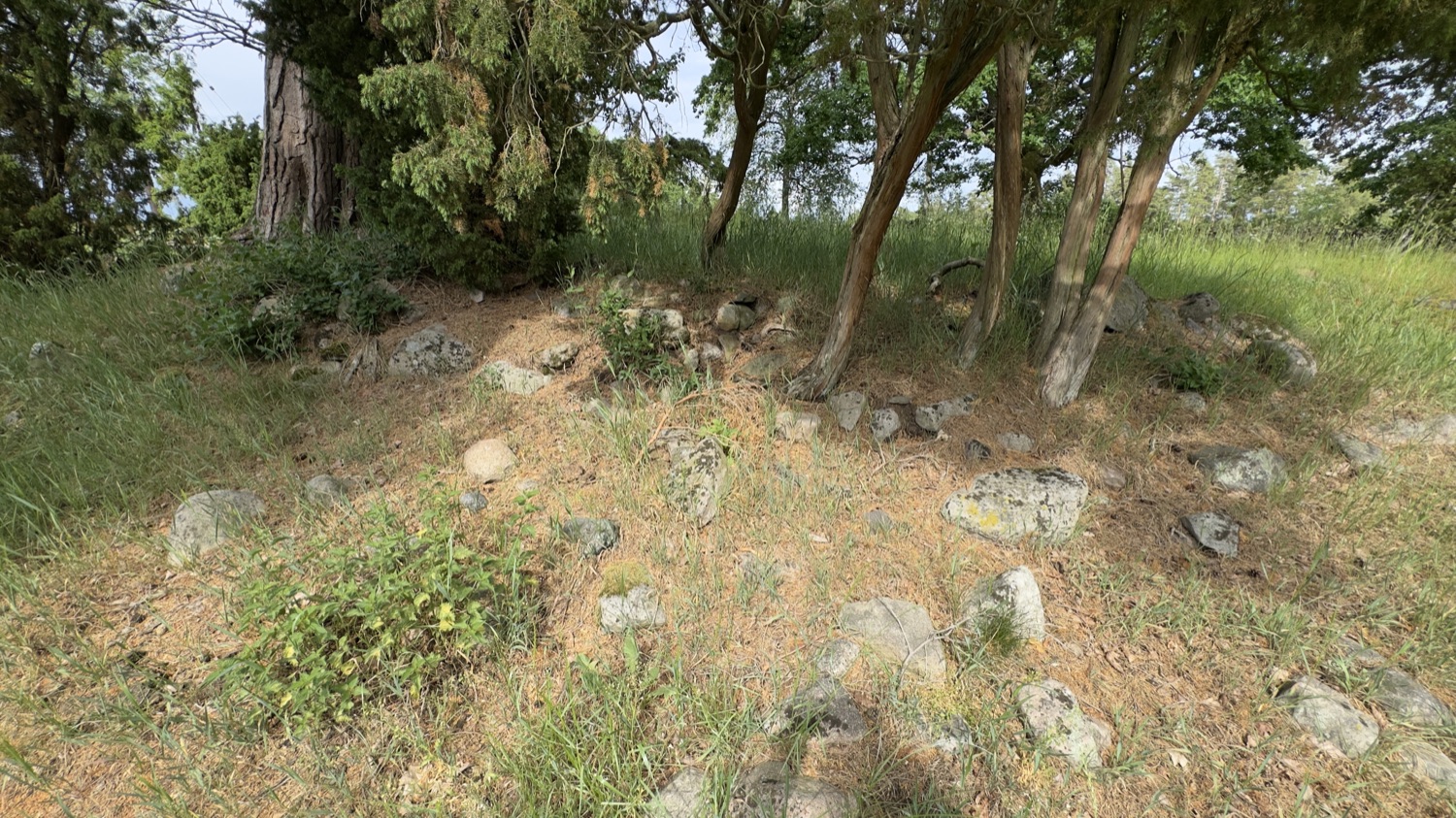
The highlight of the day. On a rise between juniper and meadow lies an entire grave field — 40 by 20 metres, made up of five stone settings. These are originally round structures, 6 to 9 metres across, built up from fist- to head-sized stones. The largest of them carries a running kerb and a central stone setting and measures a substantial 14 metres. Over the centuries some were excavated, some plundered, the odd field stone tossed on top — and yet you see it at once: people buried their dead here, with care, in the form that was sacred to them.
How I find places like these at all
Honestly? I'd walk right past most of these spots. No sign, no car park, no marker — the standing stone sits in the undergrowth, and from a distance the grave field looks like a pile of rocks. The tool that turns a walk into a journey through time is a good map.
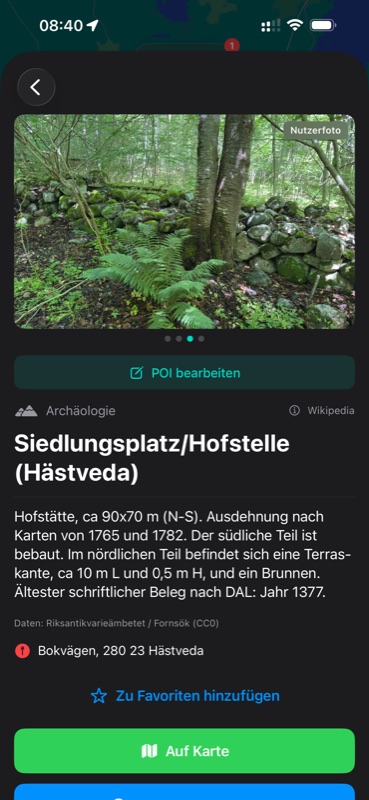
For that I use the PrimeMap app. It shows me archaeological sites as their own pins right on the map — with type, dating and the original description from the Swedish heritage register, translated into my language. So I know in advance what's waiting for me, and I find places that would otherwise stay invisible.
Discover the deep past on your doorstep
Over 300,000 archaeological sites in Sweden alone — plus castles, ruins and lost places across Europe. With descriptions in your language. Free for iPhone & Android.
